• 28 Jan 2025 10:05 AM | Smart About Salt (Administrator)

    How to Melt Icy Sidewalks and Driveways—Without Rock Salt or Chemicals

    op_emily-fazio_diy-ice-melt-solutions_snowy-sidewalk-with-ice

    op_emily-fazio_diy-ice-melt-solutions_snowy-sidewalk-with-ice© Provided by Home Living on Men's Journal Pursuits

    Winter's icy grip can turn your once-welcoming driveway and walkways into treacherous obstacle courses. Though traditional rock salt remains a go-to for many, a plethora of DIY snow melt solutions exist (and most common ingredients can be found right in your own kitchen).

    Look around and you'll find that homeowners use many different materials to add traction to icy surfaces. From table salt, kosher salt, and coffee grounds for instant traction on ice, to a few drops of dish soap and kitty litter, you might have success somewhere along the way. We favor spray solutions or materials that easily dissolve. Simply put: liquid and dissolvable treatments are neater, and you won't have to deal with tracking in coffee grinds into your home or staining your deck with beet juice.

    Winter's icy grip can turn your once-welcoming driveway and walkways into treacherous obstacle courses. Though traditional rock salt remains a go-to for many, a plethora of DIY snow melt solutions exist (and most common ingredients can be found right in your own kitchen).

    Look around and you'll find that homeowners use many different materials to add traction to icy surfaces. From table salt, kosher salt, and coffee grounds for instant traction on ice, to a few drops of dish soap and kitty litter, you might have success somewhere along the way. We favor spray solutions or materials that easily dissolve. Simply put: liquid and dissolvable treatments are neater, and you won't have to deal with tracking in coffee grinds into your home or staining your deck with beet juice.

    Downsides of Rock Salt

    While commercial ice melt remains a go-to for many, its downsides are well-documented:

    • Accelerated corrosion of metal surfaces, including vehicles, bridges, and infrastructure. This corrosion will affect the underside of your car.
    • Runoff from melted snow can enter water bodies, posing a threat to aquatic ecosystems. Excessive salt levels in water can harm fish, plants, and other aquatic life.
    • Damaging to soil structure and plant health. It may lead to soil compaction and cause vegetation to experience dehydration, nutrient imbalances, and overall stress.
    • Irritates pets' paws, causing discomfort and potential injury. Ingesting salt can also be harmful to pets, leading to health issues. Pet-safe ice melts are preferable all-around.
    • Less effective in extreme cold temperatures, typically below 20°F
    • Residue can accumulate on roads, sidewalks, and other surfaces, leading to a white, crusty appearance. This buildup may require additional cleaning efforts.
    • It's more effective at preventing ice formation than melting thick layers of existing ice. In cases of severe ice accumulation, other de-icing methods or additional materials may be needed.
    • It needs to be reapplied. It's only a temporary solution, especially during extended periods of frigid temperatures and precipitation.

    Are there downsides to using calcium chloride or magnesium chloride?

    Yes, there's an environmental impact. In short, calcium chloride can harm vegetation and damage carpets. Magnesium chloride, while thought to be safer for icy conditions, tends to be too expensive for frequent use.

    DIY Ice Melt Alternatives to Rock Salt

    1. White Vinegar

    • Vinegar reigns supreme as a natural de-icer. Its low freezing point (around 28°F) disrupts ice crystal formation, causing ice to melt.
    • Mix equal amounts of vinegar and water in a spray bottle for a simple yet effective solution. For thicker ice, adjust the ratio to 40% water and 60% white vinegar.
    • Remember, vinegar's acidic nature can dull concrete over time, so it's best for occasional use or on paths with alternative paving materials.

    2. Baking Soda

    • For a gentle approach, baking soda's got your back.
    • Sprinkle it liberally on icy surfaces. While slower than vinegar, baking soda lowers the freezing point of water, gradually melting the ice. Its abrasive texture also provides traction on slippery surfaces, making it ideal for steps and walkways.
    • Bonus: baking soda is pet-friendly and won't harm vegetation.

    3. Household Alcohol

    • Isopropyl alcohol, the main ingredient in rubbing alcohol, also boasts ice-melting prowess. Its low freezing point (-130°F) makes it an incredibly effective de-icer, even in harsh temperatures.
    • Combine one cup of Isopropyl alcohol with two cups of hot water in a spray bottle for a potent concoction. Mixing the alcohol with water tackles the ice layer without adding a layer of grit.
    • Note: alcohol's flammability and potential to harm plants necessitate caution. Use it sparingly and avoid contact with pets.

    4. Citric Acid

    • Citric acid, found in citrus peels and commercially available in powder form, is a homemade de-icer. You probably never thought of it as a perfect ice melt!
    • Mix one part citric acid with three parts warm water in a spray bottle. The acidic nature works similarly to vinegar, but with less bite.
    • Remember, citrus solutions can also attract curious pests and pets, so keep an eye out.

    Bonus Tips

    • Prevention is key. Apply these homemade ice melt solutions before snowfall to prevent ice formation in the first place.
    • Shovel first, melt second. Keep your shovel handy and clear snowy surfaces before applying homemade solutions for maximum effectiveness.
    • Use it where it matters most. Reserve your homemade deicer for high-traffic areas like steps, walkways, and slippery driveway edges.
    • Go natural wherever possible. Natural ice melt products are always best. Prioritize pet-friendly and vegetation-safe options like baking soda and citric acid. Some homeowners even use sugar beet juice.
    • Monitor closely. Reapply solutions as needed, especially after snowfall or heavy precipitation.
    • Use a carpet remnant at your entryway. Remember that many places you walk during the winter use rock salt and other harsh chemicals. Leave a piece of old carpeting near your entryway and leave your shoes there to avoid tracking it through the house.
  • 27 Jan 2025 11:58 AM | Smart About Salt (Administrator)

    Road salt making Ottawa-area waterways 'toxic' to wildlife, report finds | CBC News

    Expert advises individuals use more gravel or sand mixed with road salt

    Salt on a public street in the winter.

    A new report from advocacy group Ottawa Riverkeeper makes four recommendations for cities, large property owners, and local residents to reduce the amount of salt ending up in the rivers. The report found 90 per cent of samples taken over five years contained toxic levels of chloride. (Rhianna Schmunk/CBC)

    A five-year study that involved taking hundreds of water samples in the National Capital Region has found that the vast majority were "toxic" to wildlife due to road salt levels, according to a new report.

    The findings were released Monday by Ottawa Riverkeeper, a local non-profit which advocates for the sustainable use of the Ottawa River.

    Starting in the winter of 2019-2020, the group worked with community scientists to study how much road salt ends up in local rivers. 

    "Unfortunately, the impact of road salt on aquatic ecosystems can only be described as devastating," the report said.

    It issued four recommendations targeted at cities, large property owners and regular individuals in the hope that the effects of road salt — which last throughout the year — can be mitigated.

    A map of the National Capital Region, coloured to indicate population density and marked with the locations of various local streams.

    This map shows where Ottawa Riverkeeper collected water samples in the National Capital Region. It tested the smaller streams which feed into the larger Ottawa River because they wind through urban areas where road salt is likely to enter the ecosystem. (Ottawa Riverkeeper)

    'Shocking' revelations

    Larissa Holman, Ottawa Riverkeeper's director of science and policy, said they became curious about the impact of road salt after learning about the harms other cities were experiencing.

    Community scientists in Ottawa gathered about 500 water samples from 45 locations at streams in populated areas — streams that feed into the Ottawa River and "support the wildlife and the organisms" that are part of the watershed, Holman explained.

    According to the report, only 10 per cent of the samples collected over the five years had safe levels of chloride (the key component of road salt). 

    It was a "shocking" revelation, Holman said.

    "Almost everywhere we were testing, at one point or another, the water that supports freshwater ecosystems was toxic to those organisms that live there," she said.

    High chloride levels even continued into the summer, long after snow clearing and road salting had stopped, the scientists found.

    The report also compared Ottawa and Gatineau's five worst streams, finding that none of the samples taken in Ottawa were safe although some were safe in Gatineau.

    Holman attributed the difference to Ottawa being a denser city with more frequent road salt applications and cleanings.

    Road salt also seeps into soil and eventually reaches the groundwater, causing the salinity of above-ground water to rise slowly and consistently over time, according to Philippe Van Cappellen and Jovana Radosavljevic, ecohydrologists at the University of Waterloo.

    It's usually the main driver of drastic changes to salinity of water in urban areas, said Radosavljevic, who has been studying how urbanization over time has affected the overall ecosystem of a lake in Richmond Hill, Ont.

    A bar graph showing the levels of chlorine in five Ottawa streams. All five streams are labeled as chronically or acutely toxic.

    A five-year study by Ottawa Riverkeeper identified these five bodies of water in Ottawa as having the largest percentage of samples containing high concentrations of chloride. No samples collected from Green's Creek, Mather Award Ditch, Nepean Creek, Nesbitt Creek and Pinecrest Creek were deemed to be safe. (Ottawa Riverkeeper)

    A bar graph showing the levels of chlorine in five Gatineau streams. All five streams are divided into sections indicating the samples collected were acutely toxic, chronically toxic, or safe.

    The study also identified the five waterbodies in Gatineau with the largest percentage of samples containing high concentrations of chloride: Cutter Creek, Des Fees Creek, Desjardins Creek, Moore Creek and Queen's Park Creek. (Ottawa Riverkeeper)

    'Big mind shift' needed

    The report's four recommendations are:

    1. That municipalities and large property owners should take provincial guidelines about road salt more seriously and maintain and upgrade their equipment where necessary.
    2. That they should also have road salt management plans.
    3. That sensitive ecosystems which can't tolerate any road salt must be identified and protected.
    4. That individuals should educate themselves about how to use road salt appropriately.

    In the report, Ottawa Riverkeeper said it had shared its data with the City of Ottawa and had trained snow-clearers how to salt properly.

    Holman explained that, after the temperature drops below –7 C, road salt isn't very effective — and it's almost useless if it drops to –10 C, so using sand and gravel is important.

    "That's a really big mind shift away from what we see in some of these commercial spaces or really urbanized spaces where road salt is applied in quite large amounts," she said. 

    A white woman with glasses and brown hair stands in front of a map of the Ottawa River.

    Learning how long the salt stays in the water after the snow melts highlighted that 'more needed to be done by individuals and by different organizations to help reduce their their road salt use,' Holman said. (Matthew Kupfer/CBC)

    Van Cappellen said it's not "very realistic" to completely stop using road salt or to entirely replace it, and that officials need to "start to think in terms of a circular salt economy" where the salt in the water, soil, and skies are all taken into account.

    He suggested other solutions, like collecting salty water from highways to reuse as road salt, using excess heat from buildings to heat sidewalks and roads, and adjusting liability laws so that individuals and property owners don't over-salt out of fear of being sued. 


  • 25 Jan 2025 7:39 AM | Smart About Salt (Administrator)

    Rochester preps for Winter Salt Week - ABC 6 News - kaaltv.com

    (ABC 6 News) – Winter Salt Awareness Week, a collaboration of organizations across the United States and Canada dedicated to raising awareness about salt pollution and finding ways to reduce the amount we use, begins Monday.

    Salt pollution is a major problem in Minnesota, specifically from deicing salt used on roads and sidewalks.

    Forty percent of all salt pollution in the state comes from road salt.

    Rochester alone uses between 3,000 and 5,000 tons on average – a significant amount considering it only takes a teaspoon of salt to permanently pollute just five gallons of water, and the city isn’t even covering every inch of its 450 miles of road.

    “We’ve set a level of service for the city and for us that’s main roads we’re generally getting to bare pavement,” said Dan Plizga, street maintenance manager for Rochester Public Works. “Once you get off into neighborhoods, especially dead end streets, you know we’re going to plow. If it’s a hill we might sprinkle a little salt.”

    In many spots around the city, you can see the physical damage that much salt causes.

    You may even see it on your car.

    However, there’s a less visible impact happening in our waterways.

    Chandi McCracken-Holm is the Smart Salt training administrator for the Minnesota Pollution Control Agency, overseeing the programs that teach people how go about reducing their salt output.

    “The state of Minnesota currently has a standard of 230 mg/L at which we know that there is an effect on aquatic life,” she said. “When it comes to fish, that means the higher the concentration of chloride in the water body, the smaller they may grow.”

    Luckily, Rochester’s waterways aren’t doing too bad.

    “As of this moment, the levels of chloride in the river are not into the danger zone,” said Keith Hanson, a member of the Izaak Walton League’s Rochester chapter, a partner of the city’s Salt Week events. “We’d like to keep it that way.”

    That’s where all the work the city and the state is doing comes in.

    All throughout Winter Salt Week there will be virtual events people can attend to learn more from experts on how to reduce their own salt use, and how they can get their communities involved.

    “We aren’t saying we don’t want you to use salt,” said Rachel Strauss, Rochester’s environmental education specialist. “We’re just saying be aware that you don’t need to use a lot of salt. It doesn’t need to crunch under your feet.”

    Rochester specifically is also doing a Salt Watch Monitoring program.

    Volunteers will receive a kit that allows them to measure the chloride content of a given body of water, and then report their findings so that local governments, scientists, and others can use the data to make better informed decisions.

    A special educational meeting will be held Friday, January 31 at 1:30 P.M. at St. Marys University-Rochester for those interested.

  • 22 Jan 2025 1:24 PM | Smart About Salt (Administrator)

    These silly snowplow names are getting attention. Here are the best ones.

    There’s Dolly Plowtown. Beyonsleigh. Saline Dion and Taylor Drift. Watch out for Clark W. Blizzwald, Han Snowlo, and Darth Blader. 

    Put down that novel – F. Salt Fitzgerald might be roaming a street near you this winter.  

    As snow blankets much of the United States in a rare winter storm that's impacting much of the country, plows and salt trucks with cheeky names are gearing up to pick up the mess from Massachusetts to NebraskaArlington, Virginia, to Wichita, Kansas.

    Call it a winter craze sweeping the nation. Literally.  

    In the past few years, cities and states across the country have begun holding naming contests for snowplows and other winter weather vehicles. The goal: to add some levity to stressful storms, promote safe driving and shed light on the work of emergency response crews. 

    “We thought it would be a fun engaging way to connect and engage with Connecticut residents and commuters – all in the name of safety,” said Connecticut Department of Transportation spokesperson Josh Morgan. “It is a reminder to them to not crash into us, to keep it easy and slow down on the roads.” 

    Connecticut has hosted a naming contest for its residents for the past three years, Morgan said. Last year, the state’s Department of Transportation partnered with 40 local schools for the contest to teach young children how to safely navigate around plows.  

    Some of the winning entries included SnowBob Plowpants, Up2 Snow Good and Fast & Flurryous. Morgan expects this year’s winning names to be released by Friday.  
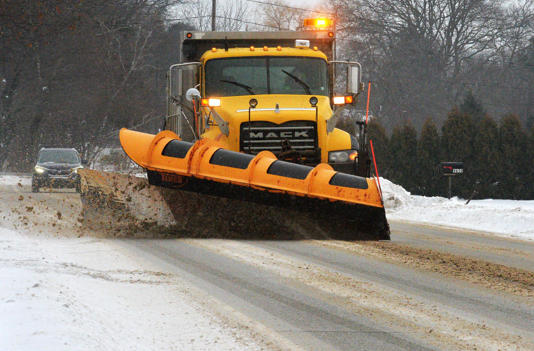
    A PennDOT plow truck heads west while clearing snow on Route 5 in Girard Township on Jan. 16, 2025.

    A PennDOT plow truck heads west while clearing snow on Route 5 in Girard Township on Jan. 16, 2025.© GREG WOHLFORD/ERIE TIMES-NEWS/USA TODAY NETWORK

    Chicago snowplow names unveiled

    The city of Chicago on Wednesday announced the winners of its annual "You Name a Snowplow" contest. The names, selected from a group of 50 finalists, will be given to one snowplow in each of Chicago's six snow districts. Residents who submitted the names will get a chance to take a photo next to the named plow.

    Several of the winning picks pay homage to the city

    , including Lollaplowlooza, named after the Chicago's annual music festival, and Bean there, Plowed That, after the famous Cloud Several of the winning picks pay homage to the city, including Lollaplowlooza, named after the Chicago's annual music festival, and Bean there, Plowed That, after the famous CloudGate sculpture in the center of the city. Other winning names include Bozo the Plown, My Kind of Plow, Snower Wacker and Scoop, There It Is.

    A new tradition 

    The quirk of naming snowplows isn’t unique to the United States. The trend appears to have begun in Scotland. Traffic Scotland's website the origins back to a 2006 naming contest for “gritters,” what they call plows, among school children in the country.  

    But Ryan Gilbert, a spokesperson for the national transportation agency, Transport Scotland, said the country didn’t officially launch its national contest until 2016. It was designed to bring attention to Scotland’s “Gritter Tracker,” which allows people to follow plows’ progress and see what roads around them have been treated. 
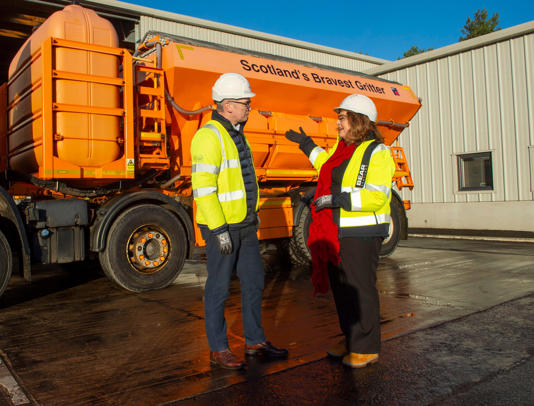
    Scotland’s Transport Secretary Fiona Hyslop visited the Burghmuir gritter depot in West Lothian to see “Scotland’s Bravest Gritter," a vehicle named by Scotland’s Bravest Manufacturing Company.

    Scotland’s Transport Secretary Fiona Hyslop visited the Burghmuir gritter depot in West Lothian to see “Scotland’s Bravest Gritter," a vehicle named by Scotland’s Bravest Manufacturing Company.© Ian Rutherford

    Today, the country’s entire fleet of 240 Gritters have all been lovingly named by citizens through local radio, newspaper and school contests. The names range from pop culture icons to snow puns.  

    Creativity knows no bounds – so the agency had to set some. Titles need to be less than 25 characters long, or under four words. Inappropriate entries and ones with swear words are not accepted. 

    This year’s fleet includes Mr. Snow-it-all, Salt Shaker, Carrie Bradthaw, Sled Zepplin, Icetalavista Baby, Brine Freeze, to name just a few.  

    Municipalities across the United States have adopted similar snow plow trackers. Arlington County in Virginia began its naming contest this year to spread the word about its snow and ice map.  

    “We wanted it to be a fun way for people to follow along, but also bring awareness to just the hard work that these crews do,” Kiara Candelaria Nieves, a communications specialist for the county’s department of environmental services, said of the emergency response crews and private contractors that operate the plows.  

    Other winning names

    If you live in a state that sees snowfall, chances are the plows that scrap your streets have nicknames, too.  

    AlaskaNevadaMinnesotaVermontDelaware, Massachusetts, North DakotaNew Hampshire, Connecticut and Ohio all have launched similar contests.  

    Here are some of the winning names from coast to coast.

    • Plowy McPlowface 
    • CTRL-SALT-DEL 
    • You're Killin' Me Squalls 
    • Yer a Blizzard, Harry 
    • The Big LePlowski 
    • Snowbi Wan Kenobi
    • Ope, Just Gonna Plow Right Past Ya 
    • Melton John 
    • Sleetwood Mac 

    This article originally appeared on USA TODAY: These silly snowplow names are getting attention. Here are the best ones.


  • 19 Jan 2025 1:12 PM | Smart About Salt (Administrator)

    How To Use & Maintain The Tailgate Salt Spreader On Your Truck

    No matter what your age, a fresh snowfall means winter fun like sledding, skiing, and snowball fights, can all become a reality. However, on a dour note, Jack Frost also makes the roads slicker. Not only do 70% of US roads stretch across areas that receive snowfall but almost 76,000 motorists are injured every year while snowflakes or sleet are coming down, per the US Department of Transportation. Fortunately, methods like salting the roads help to reduce the likelihood of vehicles slipping and sliding as people travel the streets and highways following a winter weather event. Although some argue there are reasons why road salt for winter ice is a terrible idea, which is why some areas utilize sand instead.

    There are salt spreaders you can walk behind, which are ideal for sidewalks and driveways but wouldn't make sense for vast expanses of parking lots or agricultural fields. The perfect tool for these larger jobs is something called a tailgate salt spreader, which can attach to vehicles like pickups, farm equipment, side-by-sides and utility quads. These tools work by using a spinning disc beneath a large hopper that churns and disperses salt in a wide, uniform pattern, creating an even distribution of material as you drive forward. But, if you're going to be out in the elements, remember to consider these winter driving tips to keep you safe while you travel in inclement weather.

    What's Involved With A Tailgate Salt Spreader Installation And How Do You Operate It?

    A Controller For A Tailgate Salt Spreader

    A Controller For A Tailgate Salt Spreader© RealTruck.com/YouTube.com

    In terms of installation, these products are made to utilize your truck's tow hitch. After mounting the hitch plate to the spreader, you slide the hitch plug over the pickup's receiver hitch and secure it with a hitch pin. However, the installation gets more involved with regard to power. After all, energy is needed for the motor to spin the impeller disc and disperse the salt.

    You'll need to run power cables from the spreader to the truck battery and from the engine compartment into the cab for the controller. Remember to secure the wiring with zip ties away from sources of heat, like the exhaust system, and attach a grounding wire directly to the frame. If this process sounds a bit too intensive, you can always hire professional installers to handle the process for you.

    Once installation is complete, the control unit, which can be mounted to your dashboard for convenience, features straightforward controls such as on/off and different speed settings, depending on the model you've selected. Simply open the top of the hopper on the spreader and fill it with rock salt or other appropriate de-icing material, then activate the unit using the controller. As you drive your truck, the spreader will treat the surface, making a tailgate salt spreader an excellent accessory to get your truck winter-ready.

    What About Regular Upkeep?

    Tailgate Salt Spreader Disc That Needs Cleaning

    Tailgate Salt Spreader Disc That Needs Cleaning© Dylan Stephenson/YouTube.com

    Proper care is important for any tool in your arsenal, and a tailgate salt spreader is no exception. De-icing material like rock salt is effective at melting ice because it's able to reduce the point at which water freezes. The problem, however, is that the salt and water mixture that's created is hard on many surfaces and can accelerate corrosion, even on the salt spreader itself. Therefore, it's crucial to always empty out any remaining rock salt from the hopper and rinse it before storing it.


    Speaking of corrosion, you should routinely check the power contacts of the spreader motor to identify any development of corrosive material. Products like the OriGlam 3pcs Mini Wire Brush Set work well to clean off gunk around the motor housing, which could negatively impact performance.

    Lastly, you'll also want to pay special attention to the spinning disc that disperses the salt, as it can become clogged if neglected. After all, if this part isn't functioning properly, you might end up having to re-salt an entire area if the spinner isn't rotating, for example.

    Want the latest in tech and auto trends? Subscribe to our free newsletter for the latest headlines, expert guides, and how-to tips, one email at a time.

    Read the original article on SlashGear.


  • 19 Jan 2025 1:11 PM | Smart About Salt (Administrator)

    Road salt is keeping drivers safe but harming the environment, researchers say | CBC News

    People spreading salt on their sidewalk only need one tablespoon per square metre, ecologist says


    A woman stands outside along the river holding a small container of blue salt.

    Ecologist Taryn Smit spent a year researching salt pollution in the Upper Thames River with the Canadian Conservation Corps. (Kendra Seguin/CBC)

    Social Sharing

    Sprinkling salt on the road or sidewalk after snowfall can make conditions safer for drivers and pedestrians, but can cause harm to local waterways and wildlife, London, Ont., researchers say.

    People studying salt pollution are calling on cities and residents to consider the type and amount of salt they use this winter.

    "It's still something that we need to use for safety and getting around, it's not an avoidable thing, but we can reduce the amount of salt we use," said Taryn Smit, an ecologist volunteering with Canadian Conservation Corps, who recently completed a project studying road salt pollution. 

    The salt used on the road is often the same salt that people have at the dinner table, said Smit: sodium chloride. Salt helps to lower water's freezing temperature, meaning that it prevents ice from forming and helps melt ice already on the road.

    "Eventually when the snow melts, all that salty water runs into our streams and rivers," Smit said. 

    When organisms, like fish or frogs, are in freshwater with too much salt, they cannot maintain the necessary balance between salt and water in their bodies, Smit said. 

    "Think about if you have not had enough water and now you're starting to get headaches, feel sick and dehydrated," said Smit. "The same kind of process will happen with anything that lives in the stream of the river because there's salt in the water."

    A woman stands next to a river.

    Taryn Smit researched salt pollution in the Upper Thames River. (Kendra Seguin/CBC)

    This can cause them to become sick or die, Smit said, which can then cause a chain reaction in an ecosystem.

    Smit said there are some unexpected creatures that are impacted by salt pollution, including deer who are attracted to salt on the roads which can make them more susceptible to getting hit by cars.

    Reducing salt usage

    In the Upper Thames River, Smit said rural parts of the watershed are doing "pretty well" with salt levels, but there are a few closer to urban locations with salt levels that are close to passing federal guidelines for too much salt.

    Cities and their residents should be reducing the amount they use, she said. She recommends first shoveling the snow and clearing the ice before spreading a one tablespoon of salt per square metre. After the snowfall is over, there is still another step.

    A small amount of road salt is being poured out of a container into a hand.

    People spreading salt on their driveways only need to use one tablespoon of salt per square metre, said ecologist Taryn Smit. (Kendra Seguin/CBC)

    "Once it's done its job and you're not expecting any more ice, you can sweep that salt up, put it in a bucket, keep it and use it again," said Smit. "That's also a way to use less salt for your pocket to save money."

    Salt and corrosion 

    Researchers at Western University are also looking into road salt sustainability, specifically focusing on how road salt can corrode metal and concrete.

    "We're basically looking at the corrosion behaviour of salt against metals, the environmental impact the salt can cause, the ice melting performance of salt and the costs," said Robert Addai, a PhD candidate at Western who is part of the study.

    "Maybe you get cheap salt today but the cost of repairing corrosion and the environment in the future may be higher," he said.

    A man stares at the camera for a photo.

    Robert Addai is a PhD candidate at Western University studying road salt corrosion. (Robert Addai)

    While the research is still in progress, Addai said his work so far has included looking into nine different types of salt to find out which is the most environmentally friendly. He said that all salts corrode, but inorganic salts such as the commonly-used sodium chloride cause less damage by primarily corroding metal.

    Using a mixture of different types of salts can cause even more damage, Addai said, as they end up corroding both metal and concrete.

    "Organic salts are corroding the concrete and the cost of repairing concrete is more than the cost of repairing metals," Addai said. "It's good that we stick to the inorganic salt like sodium chloride and calcium products we have been using."

  • 18 Jan 2025 8:41 AM | Smart About Salt (Administrator)

    Native Plants Eyed to Tackle Road Salt Pollution | Mirage News

    Salt pollution in freshwater is a growing global concern.

    Excessive salt harms plants, degrades soil, and compromises water quality. In urban areas, road salts used for de-icing during winter often wash into stormwater systems, posing health concerns and challenges for infrastructure.

    Specifically, salts can impact the processes like filtration and contaminate retention basins that are used to manage and treat urban stormwater runoff. Megan Rippy , assistant professor in civil and environmental engineering, is on a mission to understand how salt affects plants in stormwater detention basins and assess whether certain plants can mitigate salt pollution through a process called phytoremediation.

    "Plants play an important role in green infrastructure performance, but only 1 percent of plants, known as halophytes, can handle highly saline environments," said Rippy. "This makes it important to characterize the threat salts pose to green infrastructure as well as the potential of salt tolerant species to mitigate that threat."

    Rippy led a yearlong study funded by a National Science Foundation Growing Convergence Research program award. She studied stormwater detention basins in Northern Virginia, exploring the impacts of road salts on plants, soils, and water quality in green infrastructure systems. These basins, designed to manage stormwater runoff and improve water quality, face challenges from road salts used during winter months.

    The research published in Science of the Total Environment shows that the amount of salt present in green infrastructure systems does reach levels that threaten plant communities. However, relying on salt-tolerant plants to mitigate the program is unlikely to be effective because they simply don't assimilate enough salt.

    Salt levels and plant resilience

    The research found that basins draining roads exhibited the highest salt levels, causing significant stress to plants. Parking lots were next with moderate salt levels, while basins draining grassy areas had little to no salt stress.

    Of the 255 plant species identified in the basins, 48 native species showed the ability to tolerate high salt concentrations. Certain plants, particularly cattails, absorbed substantial amounts of salt, significantly higher than other species.

    The researchers focused on 14 detention basins across Northern Virginia, measuring salt levels in water, soil, and plant tissues throughout the four seasons. The water samples were analyzed at the Occoquan Watershed Monitoring Laboratory for electrical conductivity and major salt ions. The basins provide drainage for different types of land, including roads, parking lots, and grassy areas.

    Can plants solve the salinity problem?

    While salt-tolerant plants like cattails showed promise, their impact on overall salt removal was limited. Even in a basin densely planted with cattails, only about 5 to 6 percent of the road salt applied during winter could be removed. This suggests that phytoremediation alone cannot resolve salt pollution but could complement broader salt management strategies that also address winter salt application.

    "The amount of salt cattails remove is roughly equivalent to the mass of one to two adults," said Rippy. "That pales in comparison to the amount we actually apply to the roads and parking lots, suggesting that we shouldn't expect plants to be a silver bullet solution to our salinization problem."

    Climate change also may alter salt stress dynamics in stormwater systems. As winters in transitional climate zones become milder with more rain and less snow, the amount of salt applied to roads could decrease. This shift might bring salt levels in basins more in line with plants' ability to absorb and process the salinization.

    However, regions with persistent snow cover may experience different challenges, such as delayed deicer wash-off and plant emergence, which could affect salt stress profiles and phytoremediation capacity.

    Resilient systems for managing urban salt pollution

    This study provides valuable insights into the interplay between plants, salt pollution, and green infrastructure. By understanding how plants tolerate and process salt, Rippy is one step closer to developing sustainable solutions for protecting freshwater ecosystems.

    While plants alone cannot solve our salt pollution problem, their role in integrated management strategies is critical. This can offer guidance for urban planners, engineers, and environmental scientists to design more effective stormwater systems to manage runoff, reduce salt pollution, and create greener, more resilient cities.

    Original study: https://doi.org/10.1016/j.scitotenv.2024.178310